
Lily Bamboo 百合竹 Feng Shui Plant: Meaning, Benefits & Where to Place It

Updated: Sep 24
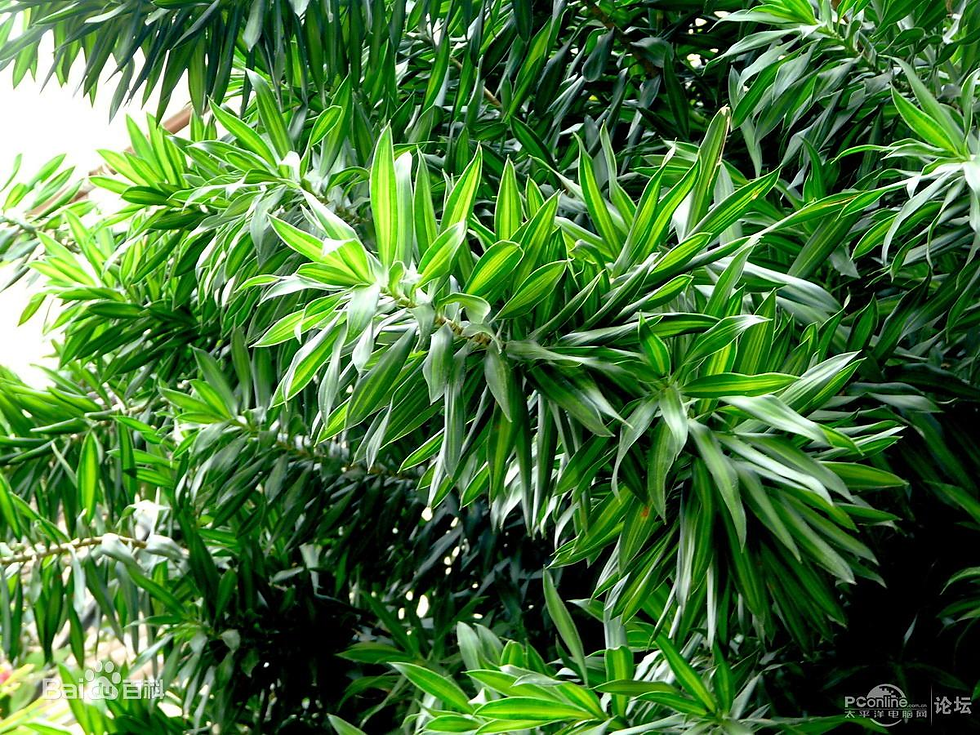
Lily Bamboo is an attractive evergreen plant known for its long stems and broad green leaves. In traditional Feng Shui use, it is associated with good fortune, wish fulfilment, positive relationships and harmonious Qi.
Its upright growth combined with softer, spreading foliage makes Lily Bamboo particularly useful as an indoor Feng Shui plant. Apart from its symbolism, it can also serve practical purposes—softening empty corners, introducing greenery and creating a natural division between different areas of a room.
What Does Lily Bamboo Symbolise in Feng Shui?
Lily Bamboo is commonly associated with:
Wish fulfilment
Good fortune
Growth and development
Positive relationships
Popularity and social connections
Harmony
Vitality
Its healthy green foliage represents living Wood energy 木气.
Within the Five Elements 五行, Wood is associated with growth, development and expansion.
This makes Lily Bamboo suitable for spaces where you want to introduce a feeling of life, movement and continued development.
1. A Symbol of Wish Fulfilment
One of the traditional associations of Lily Bamboo is the realisation of wishes and aspirations.
Rather than interpreting this as placing a plant in your house and waiting for your wishes to come true, there is a more practical way to understand the symbolism.
A plant begins small and develops gradually when the right conditions are provided.
Our goals work in much the same way.
Intention + Environment + Action + Time = Growth
From this perspective, Lily Bamboo can serve as a symbolic reminder that achieving what we want requires the right conditions as well as consistent action.
Feng Shui should support our actions, not replace them.
2. Lily Bamboo and Good Fortune
Healthy green plants have traditionally been associated with vitality, growth and flourishing Qi.
The broad green foliage of Lily Bamboo gives the plant a lush and abundant appearance, which contributes to its association with good fortune.
However, the health of the plant is important.
A vibrant plant communicates growth much more effectively than one with continuously yellowing, damaged or dying leaves.
If you choose plants for Feng Shui purposes, maintaining them properly should always be part of the practice.
3. Lily Bamboo for Popularity and Relationships
Lily Bamboo is also traditionally associated with popularity and positive interpersonal relationships.
This does not mean that placing one in your home will automatically make everyone like you.
A more practical Feng Shui interpretation involves the environment in which social interaction takes place.
Plants can soften an overly hard or sterile room and make a space feel more welcoming and comfortable.
For areas where people regularly interact—such as a living room, reception area, meeting space or office—healthy greenery can contribute to a warmer atmosphere.
In Feng Shui, the environment supports human behaviour.
The plant creates the setting.
You still have to build the relationship.
4. Using Lily Bamboo to Divide Qi
One interesting traditional application of Lily Bamboo is its use as a soft divider within a space.
Modern homes increasingly use open-concept layouts. The living room, dining area, study and entrance may all exist within one continuous space.
Sometimes there is a need to create a clearer transition between these different activities.
Instead of immediately building a solid partition, a sufficiently sized plant can create a softer visual boundary.
Lily Bamboo can therefore be used to:
Define different functional zones
Create a gentle visual screen
Provide some privacy
Reduce the feeling of an overly open space
Guide movement through a room
Introduce greenery between different activities
From a Feng Shui perspective, this can help organise how people and Qi move through the environment without creating an unnecessarily hard barrier.
5. Lily Bamboo for Empty Corners
Lily Bamboo can also be useful for softening empty or visually awkward corners.
A completely empty corner can sometimes make a room feel unfinished, while sharp architectural lines can make an environment feel harder.
A healthy plant introduces height, texture and organic movement.
However, this does not mean that every empty corner needs a Feng Shui plant.
The plant should improve the composition of the room rather than simply fill space.
If adding a large plant makes a small room feel congested, then it may create the opposite effect.
Good Feng Shui requires balance and proportion.
Where Should You Place Lily Bamboo for Feng Shui?
Lily Bamboo can potentially work well in:
Living rooms — to introduce greenery and soften the environment.
Entrance areas — where there is sufficient space and the plant does not obstruct the doorway.
Home offices — to introduce living Wood energy into the workspace.
Reception and meeting areas — to create a warmer and more welcoming environment.
Room corners — to soften awkward architectural areas.
Between functional zones — where a natural visual divider is useful.
There is no universal "lucky corner" that works for every property.
More precise Feng Shui placement should consider the property's facing direction, layout, surrounding forms, activities within the space and overall Qi flow.
Don't Block the Qi
One common mistake with large indoor plants is choosing a plant that is too big for the space.
If Lily Bamboo is positioned near an entrance or walkway, make sure that it does not interfere with normal movement.
A useful principle is:
Use plants to guide Qi, not block Qi.
If people have to squeeze around the plant every day, the placement probably needs reconsideration.
Lily Bamboo Plant Care Guide
The common name "Lily Bamboo" can be used for different Dracaena-type ornamental plants depending on the nursery or market, so it is useful to confirm the botanical name of the particular variety you are purchasing.
This is especially important because Lily Bamboo should not automatically be confused with true bamboo.
Light
Lily Bamboo generally prefers bright, indirect natural light.
Avoid suddenly placing an indoor-grown plant under intense direct afternoon sunlight, particularly in Singapore's tropical climate, as this may damage the foliage.
Observe the leaves and adjust the position if necessary.
Watering
Check the growing medium before watering.
Water when appropriate rather than following a rigid daily schedule.
The soil should not remain continuously waterlogged, as excessive moisture can affect root health.
Make sure containers have adequate drainage.
Fertilising
Apply an appropriate indoor or foliage plant fertiliser periodically during active growth.
Avoid excessive fertilising. Healthy, steady growth is preferable to trying to force rapid growth.
Trimming and Maintenance
Remove:
Yellowing leaves
Brown or damaged foliage
Dead growth
Unhealthy stems
Clean pruning tools should be used when trimming.
You can also gently clean dust from broad leaves periodically. Apart from improving the appearance of the plant, this makes it easier to monitor the foliage for pests and other problems.
Is Lily Bamboo a Good Feng Shui Plant?
Lily Bamboo can be a useful Feng Shui plant for the home or office because it combines symbolism with practical spatial functions.
Its green foliage represents growth and vitality.
Its traditional symbolism is connected with good fortune and wish fulfilment.
Its softer form can help balance hard architectural surfaces.
Its height and foliage can be used to define spaces and soften corners.
And when placed in social areas, greenery can contribute to a more welcoming environment.
But the plant itself should never become the entire Feng Shui solution.
Think about:
Plant + Placement + Proportion + Purpose
Choose the right plant.
Put it in the right environment.
Make sure its size suits the space.
And understand why you are placing it there.
The Deeper Feng Shui Lesson of Lily Bamboo
Lily Bamboo is traditionally associated with the realisation of wishes.
But perhaps there is a more useful way to understand that symbolism.
A plant does not grow simply because we wish for it to grow.
It needs light, water, nutrients, space and time.
Our goals are very similar.
Feng Shui can help us create a supportive environment, but we still need to provide the action.
A good environment creates better conditions for growth. What we do within that environment determines the result.


Comments